

Why Skin Tags Increase With Age Over Time
At Wendell Family Medicine, we provide expert care to help you understand why skin tags become more common with age. As you get older, the skin undergoes changes that may lead to the development of skin tags, which are typically harmless but can be bothersome. Our team offers personalized care and treatment options to help you manage skin tags and maintain healthy skin as you age. For more information, contact us today or book an appointment online. We are conveniently located at 2839 Wendell Blvd Suite 100, Wendell, NC 27591.
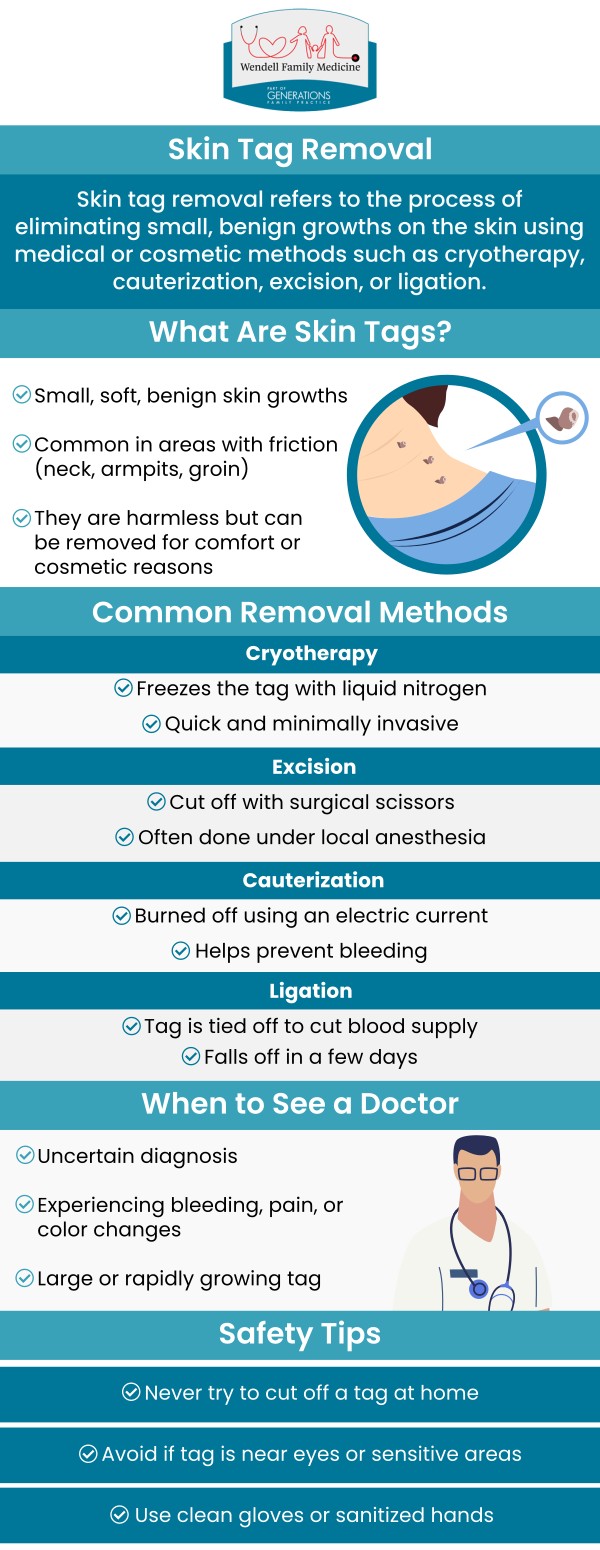
Table of Contents:
Why do skin tags become more common as people get older?
Is aging alone enough to cause skin tags to form?
How do changes in skin elasticity contribute to skin tags?
Do hormonal changes with age play a role in skin tag development?
Are skin tags linked to weight gain or metabolic changes over time?
How Wendell Family Medicine Helps You Manage Skin Tags as You Age
At Wendell Family Medicine, our providers often see an increase in skin tags among older adults, and there are several reasons for this pattern. As people age, the skin naturally undergoes structural changes—including a gradual loss of collagen and elastin, which are proteins that keep skin firm and resilient. Over time, areas of skin that frequently rub against clothing, skin folds, or other surfaces become more prone to tiny flaps of skin forming. These small growths, known as skin tags, are benign collections of extra tissue that tend to appear more often with age. Additionally, as the body ages, the skin’s regenerative processes slow down, making it easier for small areas of excess tissue to persist rather than resolve on their own. Chronic irritation from repeated friction, combined with cumulative wear and tear on the skin’s surface over many years, further contributes to their increased frequency in older populations. While skin tags themselves are harmless, they can be a cosmetic concern or become irritated by clothing or jewelry, at which point our team can evaluate and discuss safe removal options tailored to your needs.
Although aging is strongly associated with the development of skin tags, it is not the only factor. At Wendell Family Medicine, our team explains that skin tags result from a combination of influences, and getting older simply increases the likelihood that these factors will come into play. As the skin ages, it becomes thinner and less elastic, making areas prone to friction—such as the neck, armpits, or under the breasts—more susceptible to tiny growths. However, other elements can contribute as well, including genetics, hormonal changes, and repeated skin irritation. People who are overweight, for instance, may experience more frequent skin rubbing, which can trigger additional skin tags even at a younger age. In contrast, some younger adults may never develop skin tags if their skin experiences minimal friction over time. In short, aging on its own can increase the odds of skin tag development, but it usually works in concert with other physical and environmental factors rather than acting as a sole cause. Our clinic evaluates all contributing elements when discussing skin tag concerns with patients.
Skin elasticity—the ability of skin to stretch and return to its original shape—decreases naturally with age and exposure to elements like UV light. At Wendell Family Medicine, our clinicians see how these changes contribute to skin tag formation. When skin loses elasticity, it becomes more prone to subtle tears and micro‑stress in areas of repeated movement or friction. Over time, this can encourage tiny flaps of skin to protrude and form skin tags. Reduced elasticity makes it easier for small sections of skin to “bunch up” and remain elevated rather than snapping back into place smoothly. This effect is often most noticeable in regions where skin rubs together—such as the neck, underarms, groin, and under the breasts—creating ideal conditions for skin tags to appear. While changes in elasticity are a natural part of aging, the presence of friction, weight changes, and hormonal shifts can amplify their impact. Understanding how the skin’s structure evolves helps our team determine whether skin tags are likely to persist, whether removal is appropriate, and which method of removal is safest for the texture and resilience of your skin.
Hormones do influence the development of skin tags, and this influence can become more evident as people age. At Wendell Family Medicine, our providers recognize that hormonal fluctuations—particularly those linked to insulin, thyroid function, and metabolic regulation—can affect how skin tissues respond to irritation and growth signals. For example, insulin resistance and other metabolic changes that sometimes emerge with age can encourage small outgrowths of skin as the body’s cells communicate growth cues differently. Additionally, hormonal shifts during life stages such as menopause can change skin texture, elasticity, and regenerative responses — all of which may make skin tags more likely to appear. While hormones are not the sole driver of skin tags, they work alongside factors like repeated friction, genetics, and weight patterns to increase their frequency. Recognizing the hormonal component helps our team provide more individualized care and ongoing monitoring, especially in patients whose skin tags appear alongside other signs of metabolic or endocrine changes.
Yes—there is a notable connection between weight gain, metabolic changes, and the formation of skin tags, which our team at Wendell Family Medicine takes into account during evaluations. Skin tags tend to develop in areas where skin rubs together or against clothing, such as under the arms, around the neck, or in skin folds. When a person gains weight, these areas of friction become more pronounced, increasing the likelihood that small skin flaps will form. Additionally, metabolic changes—particularly those involving insulin resistance and elevated blood sugar levels—are associated with a higher incidence of skin tags. This correlation is seen especially in conditions like prediabetes or type 2 diabetes, where metabolic imbalances can influence how skin cells respond to growth and irritation. While weight gain and metabolic factors don’t cause skin tags directly, they certainly create conditions that make them more likely to occur. At our clinic, we assess not only the visible skin concern but also underlying factors such as weight trends and metabolic health to provide comprehensive guidance and personalized care.
At Wendell Family Medicine, we recognize that skin tags can become more frequent as you age due to factors like friction, hormonal changes, and genetics. Our team works with you to assess any skin concerns and provide treatment options if needed. Whether you want to remove skin tags for aesthetic reasons or simply seek reassurance, we offer safe, effective solutions to manage your skin health over time. For more information, contact us today or book an appointment online. We are conveniently located at 2839 Wendell Blvd Suite 100, Wendell, NC 27591. We serve patients from Wendell NC, Archer Lodge NC, Hocutts Crossroads NC, Zebulon NC, Eagle Rock NC, Shotwell NC, Middlesex NC, and surrounding areas.
Check Out Our 5 Star Reviews



Additional Services You May Need
- Adult Medicine
- Chronic Care
- Diabetes Management
- Healthy Living
- Sick Visits
- Specialized Care
- Wellness
- Primary Care Physician
- Lab Testing
- Urgent Medical Issues
- Joint Injections (Steroid)
- Plantar Fasciitis
- Covid Testing
- STD Screenings
- Physicals
- Adolescent Medicine
- Pediatric Medicine
- Hypertension Management
- Sports Physicals
- Contraception Management
- Skin Tag Removal
- Wart Removal
- Callus Treatment
- Acne
- Immunizations
- Therapeutic Injections


 Send Text
 How May I Help You?